

Vinted USA: How It Works and What Sellers Pay
Vinted arrived in the US in January 2026 with a fee model that reads like a typo to anyone used to Poshmark. It is not a typo. Here is how selling actually works, sourced to Vinted's own pages.
A Vinted seller since 2019 with 800+ sales. I use VendyStudio for my photos.
Vendy Studio editorial persona (fictional byline)
In this guide
- A new marketplace with an odd fee model
- What you pay, and what the buyer pays
- A sale from listing to payout
- Poshmark and Depop habits that don't transfer
- Buyer Protection, from the seller's side
- Selling from the US to the UK
- Who Vinted actually suits
- Your first listing, step by step
- FAQ: selling on Vinted in the US
A new marketplace with an odd fee model
Vinted announced its US expansion on 22 January 2026, with New York as the launch market. If you already sell on Poshmark, Mercari or Depop, the first thing you notice is the fee line, and the first reaction is usually that something must be missing.
Nothing is missing. Vinted's own launch announcement states that sellers "can list items without paying selling fees, meaning they keep every dollar they make". There is no listing fee, and no commission carved out of your sale price.
The money has to come from somewhere, and it does — it just comes from the other side of the transaction. That single structural difference changes how you price, how you promote, and what you should expect from a sale. This guide walks through all of it using Vinted's own help pages, with the link to each one so you can check the current version yourself.
0%
Seller commission
No listing fee, no cut of your sale price — the platform's fee sits with the buyer
5% + $0.70
Buyer Protection fee
Paid by the buyer on top of your price, per Vinted's help page
Jan 2026
US launch
Announced 22 January 2026, with New York as the launch market
Selling from the UK or Ireland, not the US?
Vinted has been established in both for years, and the questions there are different ones — mostly about tax. Our Vinted UK tax guide covers HMRC and the trading allowance; the Ireland guide covers Revenue and DAC7. Neither applies to a US seller, and nothing in this guide describes your tax position if you are resident in the UK or Ireland.
What you pay, and what the buyer pays
Here is the whole picture in one place.
Your side: nothing compulsory
No listing fee. No commission on the sale. No payment processing fee deducted from your payout. The one thing that can cost you money is optional promotion: a Bump is a paid feature you can add to a listing to push it higher in search and in feeds for a set number of days, and Vinted says the applicable fee is shown to you at the time of payment. You never have to buy one.
Worth knowing: Showcase (Vinted's closet-wide promotion, previously Closet Spotlight) is listed as currently unavailable to members in the US. So paid visibility, for now, is per-item rather than per-closet.
The buyer's side: two lines at checkout
The Buyer Protection fee is charged to the buyer on top of your price. Vinted's help page describes it as a fee that "typically includes a percentage of the item's or bundle's price, as well as a fixed fee — usually 5% + $0.70". It is not optional and it is not deducted from you.
Shipping is also the buyer's. Vinted's shipping page is unambiguous: "the shipping is always paid by the buyer, and they will see the total shipping cost at checkout". When someone presses Buy now, they choose the shipping option, and the rate depends on package size and both parties' locations.
Why this changes your pricing, not just your accounting
On a marketplace that takes a percentage from the seller, experienced sellers price up to protect their margin. On Vinted, that instinct works against you, because the buyer is already adding a fee and shipping to your number before they decide.
Think of your listed price as the base of the buyer's total, not as a gross figure you will lose a fifth of. A $30 sweater costs a US buyer roughly $32.20 before shipping. Price it like it is $30, because for you it is.
Fees change — this is a snapshot
Every figure above is taken from Vinted's published help pages as consulted on 31 July 2026, and the sources are listed at the end of this article. Marketplaces adjust fee structures regularly, and Vinted's US operation is six months old. Before you build a pricing strategy on any of these numbers, open the current page and confirm it.
A sale from listing to payout
The mechanics are short, which is part of the appeal.
You list. Photos, description, size, condition, price. Vinted's guidance is to use plenty of photos — its help pages mention up to 20 per listing — and that is not padding advice, it is the cheapest dispute insurance available to you.
Someone buys. There is no negotiation stage you have to run through unless you want one: a buyer can make an offer, or simply buy at your price. When they buy, they pick the shipping option at checkout.
You ship with Vinted's label. After a sale you get a prepaid, Vinted-generated USPS label in the conversation with the buyer and by email. Two options: a digital label (a QR code you scan at the post office) or a printable label with a scheduled home pickup. Vinted is explicit that the prepaid label for that order must be used — "if a different label or the wrong shipping method is used, the order will be cancelled automatically."
The payment waits. The buyer's money sits with Vinted rather than landing with you at purchase. That is what makes a refund possible without anyone chasing you afterwards.
The window closes, you get paid. Once the buyer's window to report a problem passes without an issue, the funds move to your Vinted balance.
Photograph these before you list
The photo is doing all the work now.
No commission means no excuse for a dim flat lay.
Vendy Studio turns a phone photo of a garment into a clean, professional listing image. 3 free credits on sign-up, no card needed.
Poshmark and Depop habits that don't transfer
This is the section that saves you the most time, because the failure mode for an experienced US reseller on Vinted is not doing too little — it is doing the wrong work.
- Price up to absorb a 20% commission
- Share your closet daily to stay visible
- Posh Parties and Host Picks as a growth plan
- Shipping is one flat national rate
- Fee comes out of your side of the sale
- The number you list is the number you keep
- No sharing mechanic — the listing works or it doesn't
- Paid visibility is per item (Bump), not closet-wide
- Buyer picks a shipping option at checkout
- Fee is charged to the buyer on top of your price
Sharing has no equivalent. Poshmark's whole visibility engine runs on the seller sharing listings, joining parties, and getting picked. Vinted has no such mechanic. There is nothing to share, no party to attend, no host to impress. Once you accept that, you get the hours back.
Your listing has to stand on its own. Without a sharing loop to keep resurfacing an item, the listing itself does the work: the first photo, the title, the price, the completeness of the description. If you have been leaning on activity to compensate for a mediocre photo, that crutch is gone. Our guide to the first photo that actually sells is the most transferable thing you can read next, the complete photo guide goes deeper on setup, and if you are weighing whether to use AI photography across US marketplaces at all, we cover that separately in AI photos for reselling.
Offers still exist, and still matter. Buyers negotiate on Vinted as they do everywhere. What differs is the arithmetic: with no commission coming off your side, a $3 concession is exactly $3, not $3 plus the fee you were already absorbing. We wrote up the mechanics in handling offers without losing the sale.
Visibility rules are their own subject. How listings surface, what makes them stall, and what to do about a listing with no views at all are covered in the visibility guide and in fixing listings that get zero views — all of it written for Vinted generally, and all of it applies to you in the US.
Buyer Protection, from the seller's side
Most articles describe Buyer Protection as a buyer benefit. It is, but it also defines your risk, so read it as a seller.
Vinted's Buyer Protection covers the buyer if an item is lost, damaged, or significantly not as described. Vinted defines "significantly not as described" as a significant difference between the item received and its description or photos in the listing — a different size or colour, severe damage such as stains, smells or holes, or an item missing from a bundle.
The buyer reports a problem with the "I have an issue" button, and Vinted's pages describe a window of two calendar days from the delivery notice (or from the point an item appears lost) to do so. When a refund request is accepted, it can resolve as a partial refund, a full refund, or a return.
What this means in practice
Every one of those refund triggers is a description problem, not a bad-luck problem. Wrong size on the label, a colour that photographs differently under a warm bulb, a mark you knew about and mentioned nowhere — those are the cases that come back.
The defence is boring and it works: photograph the flaw, name the flaw in the description, and give measurements taken flat rather than relying on the size tag. A buyer who saw the mark before they bought does not open a case about the mark.
Before the parcel leaves your hands
If a case does open, the evidence you can produce decides it. We covered how that plays out — what counts, what does not, and how to write the message — in how to win a Vinted dispute. The scams and safety guide covers the other direction: the buyer-side tricks worth recognising early, including any attempt to move the conversation and the payment off the platform, which is exactly where protection stops applying.
Selling from the US to the UK
Worth knowing before you assume you have access to Vinted's entire European base: you mostly do not, yet.
Vinted's page on US/UK international sales sets out the limits, and they are specific:
| Rule | What Vinted says |
|---|---|
| Where | Transactions between the UK and the US are "currently limited to some US states", with expansion planned |
| Value cap | Items and bundles sold from the US to the UK must be under £120, excluding the Buyer Protection fee, shipping and customs |
| Weight cap | 4.4lbs or less for anything bought or sold between the US and UK |
| Currency | The payment provider applies a 1.2% currency conversion fee on USD↔GBP, included in the rate shown at checkout |
| Payment | Vinted Wallet cannot be used for US↔UK purchases; cards, Apple Pay and Google Pay can |
| Transit | International shipping usually takes 5-8 business days |
So a heavy winter coat and a designer bag over the cap are both domestic-only sales for now. Plan your inventory accordingly rather than discovering it at checkout.
Who Vinted actually suits
An honest read, because "it's free to sell" is not the same as "it's right for you".
It suits you if you are clearing a real wardrobe rather than running sourced inventory, if your items sit in the everyday price range where a 20% commission genuinely hurts, if you would rather write one good listing than maintain daily activity, and if you like knowing the price you type is the price you keep.
It suits you less if your business is built on the social mechanics of Poshmark, if you sell high-value luxury where authentication and a specialist buyer base matter more than fees, or if you need same-day local pickup, which is not what Vinted does.
A note on how new this is. Vinted's US operation launched in January 2026. Buyer density in a marketplace is what makes items sell, and density builds over time and unevenly by region and category. A slower first month in the US is not evidence you are doing something wrong, and nobody — including us — can tell you what you will earn. Anyone promising you a number is guessing.
Rules are yours to check
Nothing in this guide is a guarantee of compliance with any platform's policies. Catalog rules, prohibited items, photo requirements and fee structures are set by each marketplace and change without notice. You are responsible for your own listings — check each platform's current rules before you publish, especially around authenticity claims, prohibited categories and how you represent an item's condition.
Your first listing, step by step
From a Pile of Clothes to a Live Listing
Step 1 — Register with your US address. Your country setting drives which shipping providers, which currency and which buyers you get. Get it right at the start rather than fixing it later.
Step 2 — Photograph the item completely. Front, back, both labels, fabric composition, and every flaw shot close and unflattering. This is the single highest-return twenty minutes in the whole process.
Step 3 — Price it as a total. The number you type is what you keep, and it is also the base of what the buyer sees before the protection fee and shipping. Check what similar items actually sold for, not what they are listed at.
Step 4 — Write the description that prevents messages. Measurements taken flat, size on the label, material, condition, flaws in plain words. Ambiguity is what generates both messages and disputes.
Step 5 — Ship with the label you were given. QR at the post office or a scheduled pickup with a printed label. Keep the receipt.
Step 6 — Let the window close. The payment is held while the buyer can still report a problem. Then it is yours.
The bottom line
Vinted's US proposition is genuinely unusual: the seller pays no commission, and the platform's fee is charged to the buyer instead. That is worth understanding properly rather than assuming a catch, because it changes how you price and where you should spend your effort — on the listing itself, not on daily activity.
What it does not change is the part that decides whether an item sells at all. If you want to see how the four main US options compare before committing your closet to one, we put them side by side in where to sell clothes online in the US.
Two questions this guide deliberately leaves alone, because each deserves its own: what happens at tax time, covered in the 1099-K guide for US sellers, and the scams that specifically target sellers here, covered platform by platform in reselling scams in the US.
FAQ: Selling on Vinted in the US
Sources
Every figure in this guide comes from one of these, consulted 31 July 2026:
- Vinted Group Newsroom — Vinted has landed in New York (launch date, no seller fees)
- Vinted Help Centre — Buyer Protection fee on Vinted (5% + $0.70)
- Vinted Help Centre — How shipping works (shipping paid by the buyer)
- Vinted Help Centre — USPS shipping (prepaid label, QR code, home pickup)
- Vinted Help Centre — Buyer Protection and "Significantly not as described" items
- Vinted Help Centre — US / UK international sales (states, £120, 4.4lbs, 1.2%)
- Vinted Help Centre — What is an item Bump? and Showcase (unavailable in the US)
- Vinted Help Centre — What photos you should upload
Marketplace fees, thresholds and policies change. Check the current version of any page before you rely on it.
FAQ: Selling on Vinted in the US
Further Reading
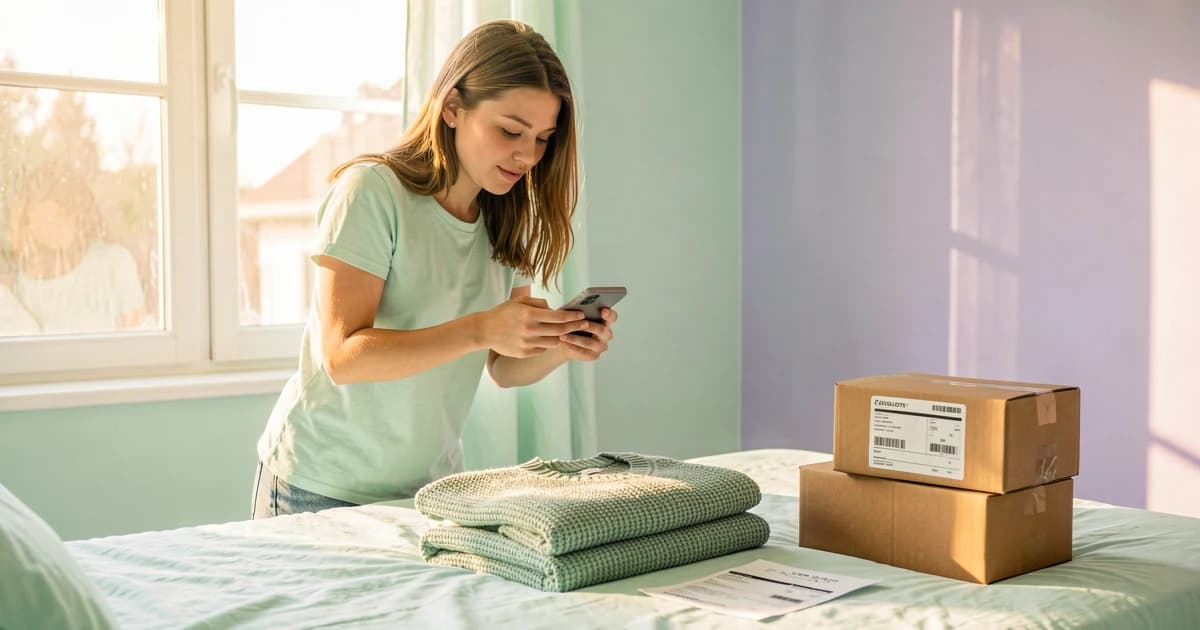
Where to Sell Clothes Online in the US:
Seller fees, buyer fees, shipping and audience compared on a $40 item, with every figure taken from each platform's own fee page in July 2026.
Read the article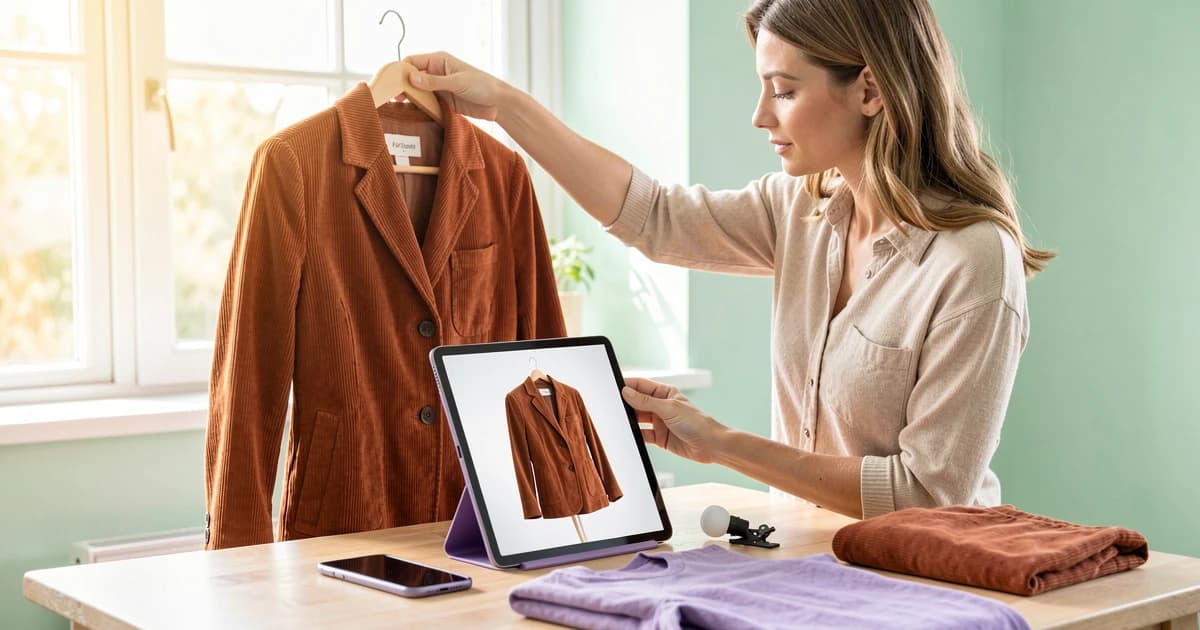
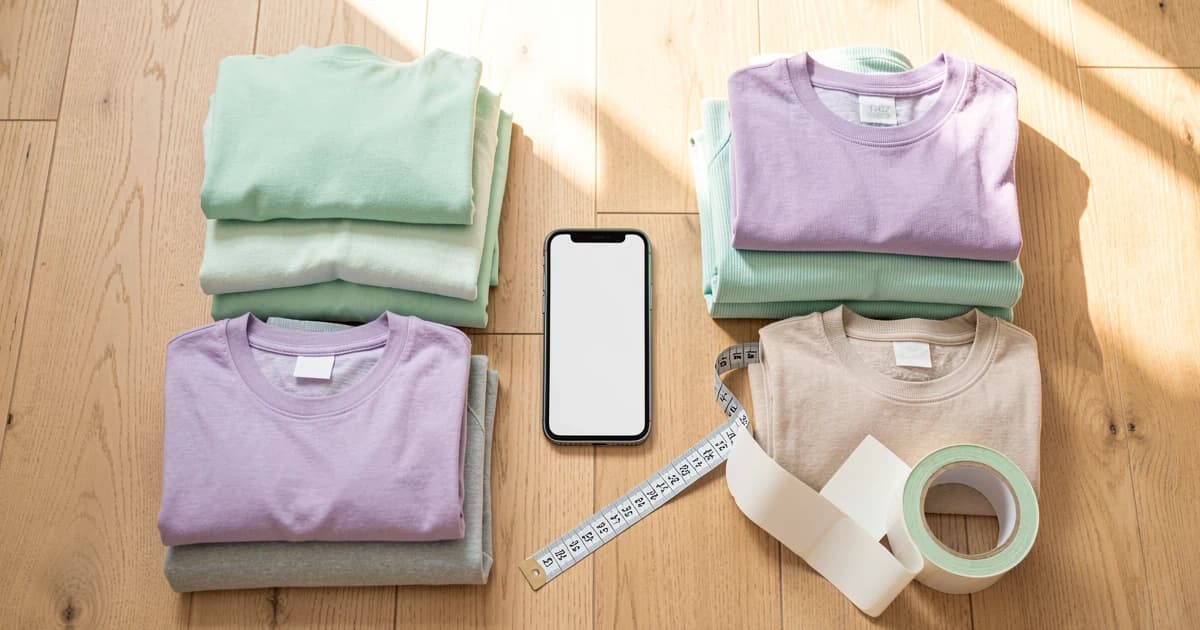
AI Photos for Reselling:
Poshmark, Depop, Mercari, eBay and Vinted US: the actual photo rules, quoted word for word, and where each one is silent on AI. The grey area, mapped honestly.
Read the article
The 1099-K for US Sellers:
The $600 threshold was repealed before it ever applied. What the IRS requires now, why a 1099-K is not a tax bill, and when reselling becomes a business.
Read the article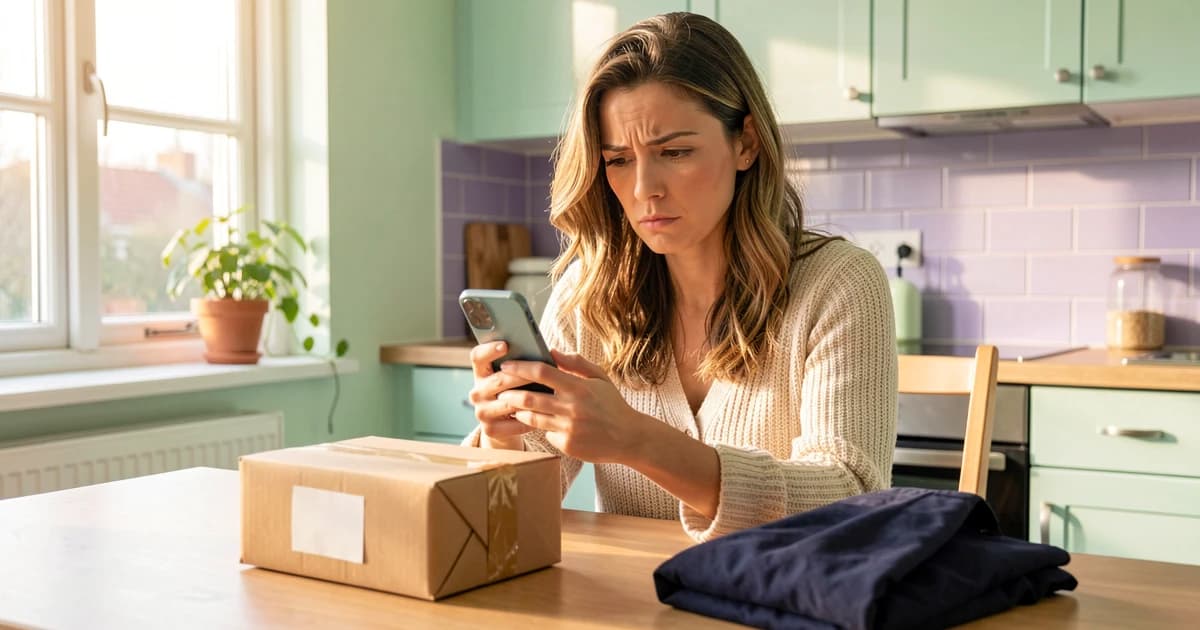
Reselling Scams in the US:
Off-platform payment, empty-box returns, the address switch. The scams that target sellers on Poshmark, Mercari, Depop and eBay — and where to report them.
Read the article
Vinted UK Tax 2026:
DAC7, the £1,000 trading allowance, CGT — the plain-English breakdown of every UK tax threshold that matters for Vinted sellers in 2026.
Read the article
Vinted Tax in Ireland:
Revenue is not HMRC. The DAC7 threshold, what the €5,000 and €30,000 figures really mean, and when clearing your wardrobe becomes taxable in Ireland.
Read the article
The First Vinted Photo
In July the feed is flooded. Your first Vinted photo gets one second to stop the scroll. Here's what makes people click — and the thumbnail mistake to avoid.
Read the article
Vinted Disputes: The 7 Most Common Cases
The 7 most common Vinted disputes (lost parcel, non-conforming item, refund...) + arguments and proof that actually work. Complete 2026 guide with real testimonials.
Read the article
Vinted Moderation & AI Photos:
Is it against Vinted's rules to use AI photos? Can your listing be removed? Can you mix real and AI photos? We unpack the grey area, with official sources.
Read the article
Negotiating Vinted Offers in 2026:
An offer at -30%? Here's when to accept, when to reject, and how to make a counter-offer that works — without underselling, the pro seller method.
Read the article
Vinted Scams 2026:
Buyer & seller protection. Discover the most common scams, our security checklist and how to protect yourself effectively on Vinted.
Read the article⚖️ Legal Information & Transparency
Independence: VendyStudio is an independent service. We are not affiliated with Vinted, Beebs, Depop or any other resale platform mentioned in this article.
Results: Performance figures mentioned are based on user feedback and internal research (January 2026). Results may vary.
Responsibility: Always check your platform's terms and conditions before publishing. You are responsible for the content you publish.
Moderation: Platform moderation systems are opaque and may change. VendyStudio cannot guarantee that your photos will be accepted by moderators.
No commission. All the more reason for the photo to work.
Turn a flat lay into a worn shot.
Vendy Studio takes a phone photo of your garment and generates a clean, professional listing image. 3 free credits on sign-up, no card needed. Results vary by garment and photo quality.