

Reselling Scams in the US: the ones aimed at you, the seller
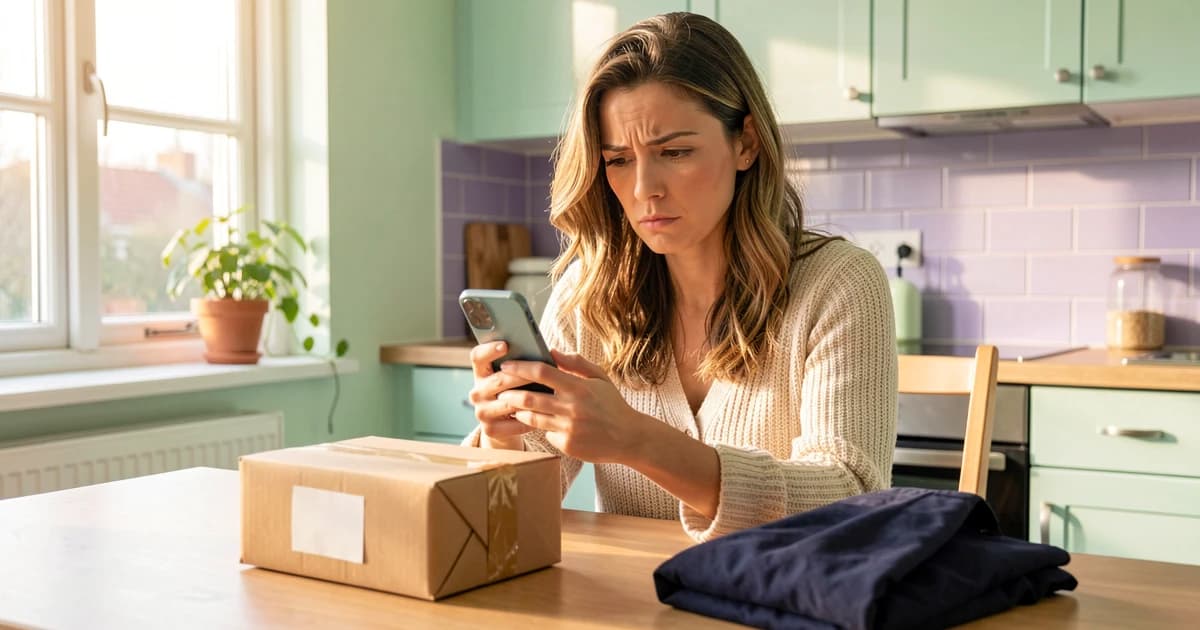
Nearly every scam guide online is written for buyers. But when you are the one shipping the box, you can lose the item and the money in a single transaction. Here is what actually runs on each platform, how to build proof before it happens, and exactly where to report in the US.
A Vinted seller since 2019 with 850+ sales. After being hit with a restriction in January 2026, she took apart the algorithm's inner workings to help protect the community.
Vendy Studio editorial persona (fictional byline)
In this guide
Why seller-side is different
Search for "Poshmark scams" or "Mercari scams" and you will find a wall of results explaining how to avoid buying a fake handbag. That advice is fine. It is also written for the wrong person, if the person is you and you are the one packing a box.
Seller-side scams work differently, and they are more expensive. A buyer who gets scammed loses money. A seller who gets scammed loses the money and the item — the dress is gone, the payment is reversed, and the person who has both is no longer replying.
They are also under-documented. The generic security sites cover the buyer's side well because that is the bigger audience. What almost nobody writes down is the specific mechanic on each platform: which flow the scam exploits, which policy sentence decides the outcome, and what evidence the platform actually looks at.
That is what this guide is. Every policy quoted here was read on its own site on 31 July 2026, and every reporting channel was checked before it was listed. Where a platform has not published a rule, we say so rather than filling the gap with something plausible.
$0
protection off-platform
Poshmark: Posh Protect does not cover transactions completed off the platform
72 hrs
Mercari's window to report
After confirmed delivery, before payment is released to the seller
Never
IC3 contacts you back
The FBI's own FAQ: IC3 does not conduct investigations and will not update you
Fewer disputes start with
a listing that showed everything 📸
Most 'not as described' claims come from listings where the buyer could not see the item properly. Vendy Studio turns a phone photo into a clean listing image of your real item. 3 free credits, no card needed.
What platform protection actually covers
Before the scams themselves, the sentence that decides most of them.
Every major US resale platform runs some form of protection scheme. These are services provided under the platform's own terms — not rights under federal or state law — and they share one hard boundary that is stated openly in the policies themselves.
Poshmark's Posh Protect page puts it in one line:
"Posh Protect does not cover trades or transactions completed off of the Poshmark platform."
Mercari approaches the same boundary from the other direction. Its Prohibited Conduct policy lists, among the things you may not do:
"Encouraging payments outside of Mercari"
"Proposing or completing a transaction in person or off of the Mercari platform"
Three consequences follow, and they apply on every platform in this guide:
- Protection lives inside the payment system. A sale settled by Zelle, Venmo, Cash App or a "friends and family" PayPal transfer is invisible to it. No amount of screenshots makes it visible afterwards.
- It is a process, not a guarantee. Outcomes depend on evidence and on the platform's own assessment. Nobody — including us — can promise you a particular result.
- The terms change. Read the current version on the platform before you rely on it, rather than a forum post or, for that matter, this article.
The one request that should always end the conversation
"Can we just do this off the app?" There is no version of this that is safer for you. Not a bank transfer, not a payment app, not a check, not a partial deposit. The reason offered will be plausible — fees, a locked account, a favour for a first-time buyer. The request is the red flag, independently of the reason attached to it.
Poshmark: the empty box and the off-platform pull
Poshmark is the most social of the US platforms — sharing, Posh Parties, closets, a genuine community culture. That sociability is exactly what the two main seller-side scams use.
The empty-box return
You sell an item. It ships, it is delivered, and the buyer opens a return case. When the parcel comes back, it is empty, or it contains something that is not what you sent — a cheaper garment, a counterfeit version of the same piece, or filler.
The buyer keeps your item and gets a refund. You are left arguing about the contents of a box that is now in your hands and unopened on camera nowhere.
Poshmark's Posh Protect covers the buyer side of this equation — "We will give you a full refund if your item never ships or does not match the listing description" — and buyers have 72 hours after delivery to open a case. As a seller, your position in that process rests on what you can show.
What actually helps here
There is no policy trick. What separates sellers who come out of this intact from those who do not is documentation created before the dispute existed:
- Photographs of the item, from several angles, immediately before packing;
- The sealed parcel photographed with the shipping label legible in frame;
- For a higher-value item, an unbroken video of the packing, from empty box to sealed tape, without a cut;
- A video of opening the returned parcel, started before the tape is broken.
That last one matters more than people expect. A return you opened off-camera and then photographed is, evidentially, a box you had access to.
The pull off-platform
The Poshmark version usually arrives inside a friendly conversation, because everything on Poshmark arrives inside a friendly conversation. A comment on your listing asks for your email or number "because the photos are blurry". A buyer offers to pay a bit more if you cancel the order and take a transfer instead.
The policy answer is the one quoted above: off-platform means unprotected, in Poshmark's own words. The practical answer is that a real buyer who wants a clearer photo can ask for it in the app, where the request and your reply are both recorded.
Triangulation
The more sophisticated version: a scammer buys your item with a stolen card and has it shipped to a third party who bought it in good faith somewhere else entirely. You ship, you get paid, and weeks later the payment reverses when the real cardholder disputes the charge.
You cannot detect this from your side, and that is the point — the transaction looks normal because from your position it is normal. The protection is procedural rather than perceptive: ship on the platform's label to the order address, keep everything documented, so that when the reversal comes you are a seller who followed the process rather than one who improvised.
- Payment agreed by Zelle, Venmo, Cash App or PayPal friends & family
- The conversation moved to text, Instagram or email
- You shipped to an address the buyer sent you in a message
- You used your own label instead of the platform's
- You have no photos of the item before it was sealed
- Paid through the platform's own checkout, in full
- Every message kept inside the app
- Shipped to the order address, on the platform's label
- Photos of item, packaging and sealed parcel with label visible
- Tracking recorded in the platform, receipt kept
Mercari: the address switch, and why it is the local speciality
Mercari's shipping flow is built around prepaid labels the platform generates for you. That is convenient, and it creates the seller-side scam that is most specific to this platform.
"Can you ship it to my new address instead?"
Shortly after buying, the buyer messages you. They moved last week. They mistyped. They are at their mother's. Could you send it to this other address — they will paste it right here.
If you do it, you have shipped to an address that does not appear on the order. The platform's record shows a package that went somewhere other than where it was supposed to. Depending on the circumstances, the buyer can then report a non-delivery, and the transaction record supports them rather than you.
The rule that has no exceptions
Ship to the address on the order, on the label the platform generated. Every time.
If the address genuinely is wrong, the clean route exists and takes two minutes: cancel the order and ask the buyer to purchase again with the corrected address on their account. A sincere buyer will do that without complaint. The reaction to being asked is itself informative.
Mercari's own Prohibited Conduct policy is aimed at the same underlying behaviour when it prohibits "proposing or completing a transaction in person or off of the Mercari platform" — an address supplied by message, outside the order, is the first step out of the system.
The 72-hour clock
Mercari's Buyer Protection gives buyers 72 hours after confirmed delivery to report an item as not as described; if no claim is filed in that window, payment is released to the seller.
For you this cuts two ways. It is a defined end point, which is good. It also means the 72 hours after delivery are the window in which your documentation has to exist already — you cannot build it retroactively once a claim lands. Photograph before you ship, not after you are accused.
The bait package and the overpayment
Two older formats still in circulation. In the first, a buyer claims the parcel arrived empty or containing something worthless — the mirror image of the empty-box return, run at delivery instead of at return. In the second, someone "accidentally" overpays and asks you to refund the difference by another method; the original payment then reverses, and the refund you sent by a different channel does not.
Both are answered by the same two habits: document what goes in the box, and never move money outside the platform's system for any reason, including generosity.
Seller protection is tied to the label
Mercari publishes a Seller Protection policy that includes shipping protection when you use a Mercari prepaid label. The general principle across US platforms is consistent: the protection attaches to the platform's own shipping flow. Using your own label, or redirecting a package after dispatch, moves you outside the flow the protection was written for. Check the current terms of the specific policy before relying on it — these documents are revised.
Depop: payment screenshots and the move to DMs
Depop's audience is young — the platform reports that the large majority of its users are under 26 — and its culture is heavily conversational, with a lot of activity happening in DMs before a sale. Both facts shape the scams here.
The fake payment confirmation
You receive what looks like a payment notification: right amount, close-enough branding, an urgent tone about shipping today. It is an email or a screenshot, and it is designed to get the parcel moving before you check the only place that counts.
The rule is absolute and simple: money exists when it appears in your balance, in the app. Not in an email. Not in a screenshot. Not in a text message that says the funds are "pending release once you upload tracking".
The move to Instagram
"Message me on IG, it's easier." It genuinely is easier — for the other party. Off the platform there is no order record, no protected payment, no report button that leads anywhere, and no history for anyone to review later.
Depop is a platform where an enormous amount of legitimate conversation happens in DMs, which is exactly why the transition from "chatting in DMs" to "paying in DMs" can feel like a small step. It is not a small step. It is the step.
The condition dispute that is not a scam
Worth naming separately, because it is more common than fraud: the buyer who genuinely believed the item was in better condition than it is. Depop caps listings at a small number of photos, which puts real pressure on each one to carry information.
That is a documentation problem, not a security problem, and it is fixable in advance — photograph the flaw and describe it. A dispute over a stain you showed in the listing is a very different conversation from a dispute over a stain the buyer discovered.
Depop's own photo rule, in its own words
Depop's help centre article What are 'stock images'? states: "Photographs are the DNA of Depop. This is why we ask that all photos you use on your Depop shop, are original and not lifted from an online source." And: "Only use photos taken by yourself."
This matters on the buying side too — a listing using images lifted from a retailer is both a policy violation and one of the clearest signals that the seller may not have the item at all. We go through what each platform's photo rules actually say, quoted in full, in our guide to AI photos for reselling.
eBay and Vinted US: the two edges of the market
eBay: authenticity is the structuring risk
On eBay the dominant fashion risk is not payment fraud but authenticity and item-not-as-described disputes, particularly in the pre-owned designer segment where the money is.
eBay's picture policy is unusually explicit about images, and the specifics protect sellers as much as buyers. Not allowed:
"Photos that don't accurately represent the item"
"Stock photos for used, damaged, or defective items"
"Photos with added text, artwork or marketing material"
"Watermarks of any type, including those used for ownership attributions"
Read from the seller's chair, the second line is a requirement to photograph the actual used item — which is also precisely the documentation that answers a not-as-described claim later. The policy and your self-interest point the same way.
Vinted US: a young market with thin advice
Vinted launched in the United States in January 2026, and its US seller community is correspondingly new. The scam mechanics are the same as everywhere else, but two things are specific to the situation.
First, the advice ecosystem is thin: most Vinted seller guidance online was written for European markets, with European consumer law and European shipping in the background. Our guide to how Vinted USA works and what sellers pay covers the US-specific mechanics. Second, a new user base is a softer target for the "I'm new here, help me out" framing that off-platform requests use.
Vinted's catalog rules apply here as elsewhere, and on photos they are strict:
"They have to be taken by you with the purpose of using the photos on Vinted."
"They cannot be replaced with stock photos, photos from ads and watermarked images."
"They have to represent the item as it is."
Our existing Vinted material applies without modification to the US platform — the complete scams guide covers twelve formats in detail, and the guide to winning a dispute walks through the evidence that carries weight.
The evidence file that wins cases
Everything above converges on one idea, so it deserves its own section: in a dispute, you do not have what happened. You have what you can show.
The platform reviewing your case was not there. It has your account, the other party's account, and whatever artefacts exist. Your memory of a well-packed parcel is not an artefact.
What to capture, and when
At listing time — photographs of the real item in good light, every angle, flaws included and visible. This is the layer people skip, and it is the one that answers "not as described", because that claim is by definition a claim about the gap between the listing and the item.
At packing time — the item photographed one more time, the packaging, then the sealed parcel with the label readable in shot. For anything expensive, a single unbroken video from empty box to sealed tape. No cuts, because a cut is where a doubt lives.
At shipping time — the platform's own label, the order address unchanged, the receipt kept, the tracking number entered in the platform rather than messaged.
If a return arrives — start recording before you touch the tape.
What documentation does and does not do
It does not guarantee a favourable decision. Platforms assess cases on their own criteria and reach their own conclusions, and no tool or routine changes that. What documentation does is move you from an unsupported assertion to a supported one. That is a real shift in position, and it is the only part of the process that is entirely within your control. Results vary case by case.
The disputes that are not scams at all
Here is the part that gets left out of scam guides, and it may be the most valuable paragraph here: a substantial share of the disputes sellers face are not fraud. They are buyers who received exactly what was listed and expected something different, because the photos were dark, partial, or flattering in a way the garment was not.
Nobody was dishonest. The seller still loses the sale, the shipping, the time and a rating.
That failure mode is fixable in advance, and it is cheaper to fix than any scam is to fight. Clear, accurate photographs of the real item — good light, every angle, flaws shown rather than hidden — prevent the dispute from being opened at all. That is the entire idea behind Vendy Studio: a clean, well-lit listing image of your actual item, from a phone photo, without a studio setup. You remain responsible for what you publish, and each platform's current image rules are the ones that apply, so check them before you list.
For the technique itself, our complete photo guide covers lighting, angles and what makes a first image stop the scroll.
Where to report in the US
Order matters, because the channels do very different things and only one of them can move money.
1. Your bank, card issuer or payment provider — first, and immediately. This is the only step with a realistic chance of recovering funds, and it is time-sensitive. A chargeback may be available; a card may need freezing.
2. Stop communicating. Do not negotiate, do not warn them you are reporting, do not give them the chance to delete the account while you are still typing. Screenshot first, block second.
3. Document before it disappears. The listing, the full message thread, the usernames, the order page, the tracking, the payment record. Accounts get deleted and threads vanish; your screenshots do not.
4. Report inside the platform. Use the report function on the order and on the profile. This is what lets the platform act on the account, and it creates the internal record any later claim rests on.
5. The FTC — ReportFraud.ftc.gov. The Federal Trade Commission's fraud reporting channel. The FTC enforces the federal standard that, in its own words, an advertisement "must be truthful, not misleading, and, when appropriate, backed by scientific evidence" — and its fraud reports feed the enforcement picture.
6. The FBI — IC3.gov. The Internet Crime Complaint Center describes itself as "the central hub for reporting cyber-enabled crime" and states that "it is run by the FBI". For an internet-enabled fraud, this is the federal criminal channel. File at complaint.ic3.gov.
7. The U.S. Postal Inspection Service — uspis.gov/report. If the U.S. Mail carried the fraud, USPIS takes reports, and its mail-fraud category explicitly includes online auctions.
8. Your state attorney general — usa.gov/state-attorney-general. Consumer complaints at state level, where a lot of practical enforcement actually happens.
Being straight with you about what reporting achieves
Filing a federal report is not a route to getting your money back, and it is worth knowing that before you file rather than after. The FBI's own IC3 FAQ says it plainly:
"You will not hear from the IC3. The IC3 does not conduct investigations and, therefore, is not able to provide the investigative status of a previously filed complaint. Investigation and prosecution are at the discretion of the receiving agencies."
What it says happens instead: "Trained analysts at the IC3 review and research the complaints, disseminating information to law enforcement and partner agencies, as appropriate."
So report because it builds the pattern that eventually shuts an operation down — that is a real and worthwhile outcome. But call your bank first, because that is the call that can actually recover the money. One practical note: IC3 shows your filed complaint only once, so save or print it before you close the window.
The US seller's checklist
Before you ship anything
The first hour after something goes wrong
And one thing to do this week, before anything goes wrong
Go and look at your three highest-value active listings. Ask, for each one, a single question: if this buyer opened a "not as described" case tomorrow, what would I be able to show?
If the answer is "the photos in the listing, and they are honest and complete", you are in good shape. If the answer is "some photos I took in bad light that hide more than they show", you have found this week's job — and you have found it while it is still cheap to fix.
FAQ: Selling Safely on US Resale Platforms
Sources
All consulted 31 July 2026.
- Poshmark — Posh Protect (does not cover transactions completed off the platform; 72-hour window to open a case) and Community Guidelines
- Mercari — Prohibited Conduct (off-platform payments and transactions), Buyer Protection (72 hours after confirmed delivery), Seller Protection and Marketplace Guidelines
- Depop — What are 'stock images'? (help centre, last updated 13 May 2025)
- eBay — Picture policy
- Vinted — Catalog rules
- Federal Trade Commission — ReportFraud.ftc.gov and Truth in advertising
- FBI Internet Crime Complaint Center — IC3.gov, IC3 FAQ and complaint filing
- U.S. Postal Inspection Service — Report a crime
- USA.gov — State attorneys general
Platform policies and agency guidance change without notice. Check the current version before relying on any of it. Where a platform has not published a rule on a point, we have said so rather than inferring one.
If your sales are growing to the point where reporting income is the next question, the companion piece to this one is our 1099-K tax guide for US sellers, which covers the IRS threshold that actually applies rather than the one most articles still repeat. And if you are deciding where to list in the first place, we compare the platforms side by side in Vinted vs Poshmark vs Depop vs Mercari.
FAQ: Selling Safely on US Resale Platforms
Further Reading
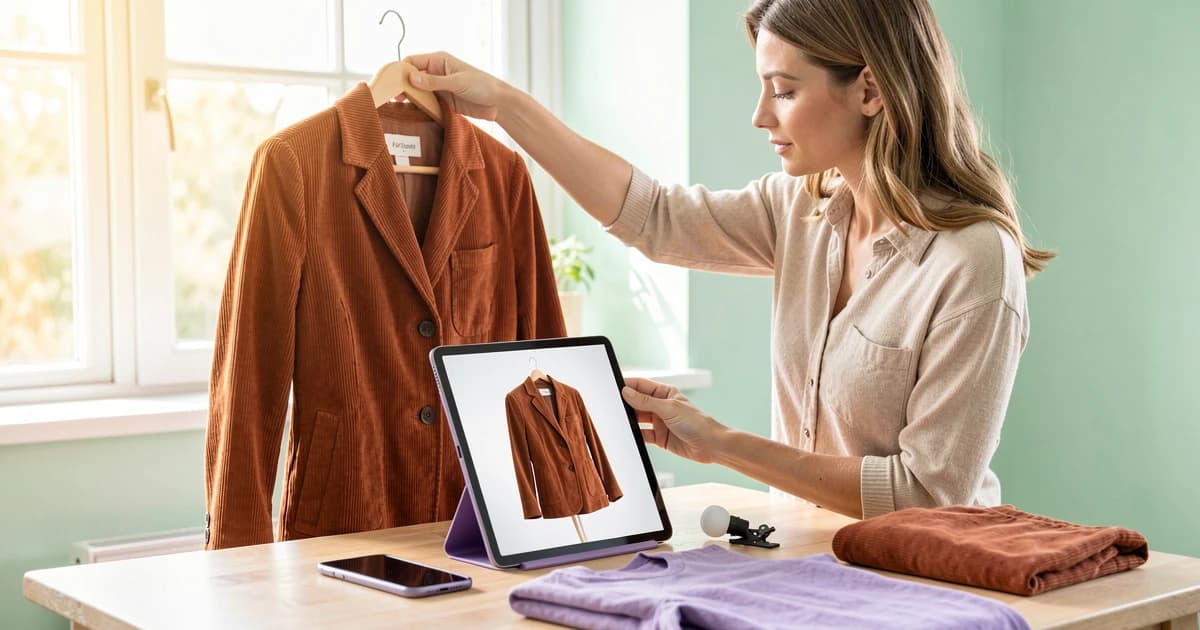
AI Photos for Reselling:
Poshmark, Depop, Mercari, eBay and Vinted US: the actual photo rules, quoted word for word, and where each one is silent on AI. The grey area, mapped honestly.
Read the article
The 1099-K for US Sellers:
The $600 threshold was repealed before it ever applied. What the IRS requires now, why a 1099-K is not a tax bill, and when reselling becomes a business.
Read the article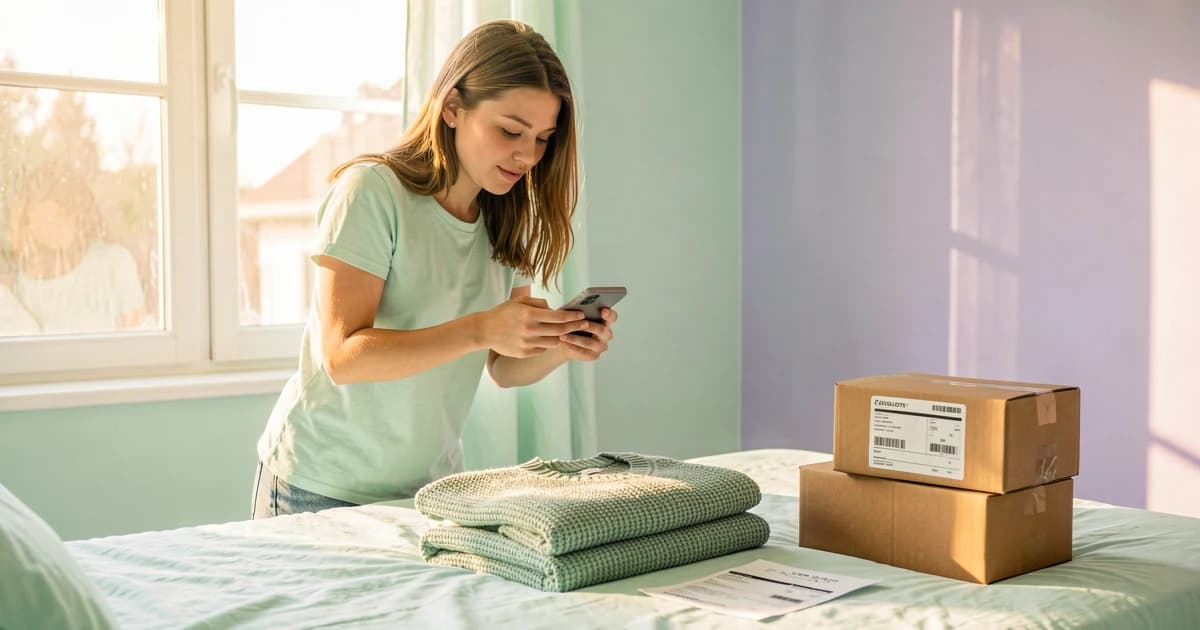
Vinted USA:
Vinted opened in the US in January 2026 with no seller fees. How listing, shipping and payouts work, and what changes if you come from Poshmark.
Read the article
Vinted Scams 2026:
Buyer & seller protection. Discover the most common scams, our security checklist and how to protect yourself effectively on Vinted.
Read the article
Vinted Disputes: The 7 Most Common Cases
The 7 most common Vinted disputes (lost parcel, non-conforming item, refund...) + arguments and proof that actually work. Complete 2026 guide with real testimonials.
Read the article
Vinted Scams, AI Photos & Shein Dropshipping
Fed up with disguised Shein dropshipping and fake AI photos on Vinted, Beebs, Depop? Learn to spot scams at first glance and discover how to use AI ethically.
Read the article
Vinted & Depop Scams in Ireland:
Buying second-hand from a private seller is 'buyer beware' under Irish law. The scams that actually run here, the Depop shipping gap, and where to report.
Read the article
How to take Vinted photos
White background, natural light, AI mannequin or worn shot: all 2026 techniques for Vinted photos that sell fast. Before/after examples included.
Read the article⚖️ Legal Notice & Transparency
Independence: VendyStudio is an independent service. We are not affiliated with Vinted, Beebs, Depop or any other resale platform mentioned in this article.
Responsibility: Always check your platform's terms and conditions before publishing. You are responsible for the content you publish.
This article is general information for people reselling clothing in the United States. It is not legal advice. Platform policies quoted here were consulted on 31 July 2026 and change without notice — always check the current version of the policy on the platform itself before relying on it. Vendy Studio is an independent tool with no connection to Poshmark, Mercari, Depop, eBay, Vinted or any other platform mentioned, and cannot guarantee any outcome in a dispute, claim or investigation. Reporting routes described here are the public channels published by the agencies named. Results may vary. For a specific legal or financial problem, consult a qualified professional.
The cheapest anti-dispute tool is an honest listing
Show the real item, clearly, flaws included.
Disputes cluster around listings where the buyer could not see what they were getting. Vendy Studio turns a phone photo into a clean, well-lit listing image of your actual item — 3 free credits on sign-up, no card needed. You remain responsible for the photos you publish: always check your platform's current rules before listing.