

Vinted New Terms and Conditions 2026: facts vs rumours 📝
Vinted Pay, photo rules, viral claims: we sorted the facts confirmed by Vinted's own texts from the rumours with zero source.
Founder of Vendy Studio, which he builds from northern France. He designs the tool, tests the AI models and digs through the rules — tax and platform — that frame online reselling.
In this guide
- The 30-second answer
- Vinted Pay: what we can verify
- Wallet, KYC and ID checks
- What the rules actually say about your photos
- The exact wording, word for word
- No, this isn't new for 2026
- What the platform says happens if you don't comply
- Sorting fact from rumour
- What we don't know (and won't invent)
- What this means for you
- Taking back control of your visuals
- Sources & references
- Conclusion: no panic, just method
- FAQ
Vinted Pay, terms, photo rules: a lot is circulating, and not all of it is true. Here is what Vinted's own texts say. 📝
A rule that's been sitting quietly in the small print for years is getting a lot of attention: your photos have to be photos you actually took.
For the past couple of weeks, Facebook groups and forums have been in a bit of a panic. You'll find very specific claims: numeric thresholds, detection systems, dated policies. The problem is that when you trace those claims back to a source, most of them lead… nowhere.
So we sorted it out. This article won't tell you what we "heard somewhere." It'll tell you what's confirmed, what's unconfirmed, and what's made up — with the source, or the lack of one, next to each claim.
14 Jan 2026
Vinted Pay wallet launch, 8 countries
Source: Vinted newsroom
16 Mar 2026
Vinted Pay obtains its UK EMI licence
Source: Vinted newsroom
0
mentions of AI in the photo rules
Neither allowed nor banned, explicitly
The 30-second answer
- Vinted Pay is the Vinted group's own e-money institution, licensed in Lithuania since 2023. Its wallet launched on 14 January 2026 in 8 countries, and it obtained a UK EMI licence on 16 March 2026.
- The photo rules aren't new: they've existed for years and require photos you took yourself, never pulled from the internet.
- Nothing about "perceptual hashing", a "No Relisting rule" or specific numeric thresholds has a Vinted source, anywhere.
Let's go through all of it, with the links. 👇
Vinted Pay: what we can verify
Let's start with what is dated and verifiable: how money moves through the platform.
Vinted Pay isn't something that appeared out of nowhere. It's the Vinted group's own e-money institution, licensed in Lithuania by the Bank of Lithuania since 2023. The wallet first launched on 14 January 2026 in eight countries (Lithuania, Latvia, Estonia, Finland, Greece, Slovakia, Slovenia, Croatia). The group then obtained a UK EMI licence on 16 March 2026.
In other words: Vinted is bringing its payment infrastructure in-house.
Wallet, the 5-day rule, and identity checks
The terms currently in force (version dated 18 December 2025) already set out three rules:
- The wallet pays automatically first. If it's funded, it covers your purchases before your card does.
- A seller has to create a Vinted Wallet within 5 calendar days of their first sale. The text is explicit: "If you're a Seller, you'll need to create a Vinted Wallet within 5 calendar days of making your first sale."
- Identity verification (KYC) is mandatory, for anti-money-laundering purposes. Fail the KYC check, and there's no wallet.
On payment methods, the official help page currently lists: Visa, Mastercard, JCB, Discover, American Express, Diners Club, prepaid and virtual cards, the Vinted Wallet, Apple Pay on iOS, and Google Pay on Android and web. Neither bank transfer nor buy-now-pay-later appears on that page, despite what a fair few articles claim.
A useful habit
Don't leave hundreds of pounds, euros or dollars sitting in a marketplace wallet. This advice has nothing to do with Vinted Pay specifically: it applies to any marketplace wallet. Transfer to your bank account regularly, and check your ID on file is still valid.
Your checklist before the next terms update
Clean listing photos,
from photos that are actually YOURS 📸
Vendy Studio starts from the photo you take of your own item and turns it into a sharp, clean render. Nothing is borrowed from the internet. 3 free credits on sign-up, no card required.
What the rules ACTUALLY say about your photos
This is the topic that worries people the most, and it's also the one with the most nonsense written about it. So let's keep it simple: we're quoting the actual text.
The exact wording, word for word
Vinted's catalog rules, checked on 9 September 2026, say this:
"Photos have to be taken by you with the purpose of using the photos on Vinted."
"They cannot be replaced with stock photos, photos from ads and watermarked images."
"They have to represent the item as it is - no image editing is allowed."
The same document adds a requirement on the first image:
"The first photo should clearly represent the whole item."
And the terms and conditions currently in force (version dated 18 December 2025) reinforce where the content has to come from:
"To list an Item for sale on the Site, you will need to take and upload a photo and write a description (neither can be taken from the internet…)"
Three requirements, and they fit in one sentence: the photo is yours, it doesn't come from the internet, and it shows the item as it actually is.
- Stock photos or image-library photos
- Ad photos or brand catalog images
- Copyrighted images
- Watermarked images
- A photo taken from the internet (current terms)
- Editing that changes how the item actually looks
- Photos taken by you, for Vinted
- The item shown as it actually is
- A first photo showing the whole item
- A description written by you, not copied online
- A wallet created within 5 days of your first sale
- An identity check (KYC) that goes through
No, this isn't new for 2026
Here's the point we won't budge on, even though it makes for a less dramatic headline: Vinted didn't "invent" these rules for 2026. They're structural, they've existed for years, and they weren't written with computer-generated photos in mind — they were written against stolen photos and misleading listings.
You'll come across articles claiming "Vinted just banned reused photos." That's false. What's true is that the rule already exists.
There's no magic date after which your old listings suddenly become non-compliant. They don't. They either already were, or they weren't.
What the platform says happens if you don't comply
The catalog rules explicitly set out an escalation:
- a listing can be made invisible or removed;
- on a repeat, the account can be temporarily or permanently restricted.
That's written in black and white in the public document, and it isn't new either.
Nobody speaks for Vinted, us included
We read public documents and tell you where they come from. Interpreting its own rules, listing by listing, is Vinted's call — and those rules can change without notice. Nothing here is a guarantee, either way.
Sorting fact from rumour
This is the part you won't find done properly anywhere else, because it's tedious work: we went looking for the source behind every viral claim. For several of them, there isn't one.
This isn't a moral judgement, it's a checkable fact: these claims circulate across blogs, often with near-identical wording from one site to the next — the typical signature of copied or mass-generated content. None of them link back to a Vinted communication. We looked. We found none.
- The "Behavioural Identity" system
- A "No Relisting rule" from January 2026
- Perceptual-hash photo detection
- A "6-month memory" of visual fingerprints
- Specific numeric thresholds (60 relists/day, 200 items, 24h freeze)
- An "unprecedented 2026 ban wave"
- Vinted Pay: Lithuanian e-money licence (2023), wallet launched 14 January 2026
- UK EMI licence obtained on 16 March 2026
- Catalog rules require photos taken by you
Let's go through them one by one, because it's worth it:
The “Behavioural Identity” system
Presented as a system that would profile your behaviour as a seller. No Vinted source, anywhere. The term doesn't appear in any press release, help page or terms document we could find. It's possible the platform runs some form of behavioural analysis — most marketplaces do — but nothing supports the claim that a system carrying this specific name exists.
The “No Relisting rule” from January 2026
A supposed ban on relisting your own items, dated with suspicious precision. No source. Search "Vinted relisting rule" today and you'll land on dozens of pages presenting it as established fact. None of them cite Vinted. What the public rules actually say is that the photo has to be yours — not that republishing your own item is prohibited.
Perceptual hashing and the “6-month memory”
The idea that a previously used photo on Vinted leaves a visual fingerprint kept for six months, compared against a database of brand images. It's technically plausible — that doesn't make it information. No Vinted communication describes this mechanism. Platforms don't publish the details of their detection systems, which leaves plenty of room for confident-sounding theories.
The specific numeric thresholds
60 relists per day, 200 items, 7 to 14 days, a 24-hour freeze… These numbers spread because they're reassuring: a specific figure makes it feel like someone knows. None of them are sourced. Be especially wary of any article that gives you a precise threshold without ever saying where it found it.
The “unprecedented 2026 ban wave”
Restrictions do happen, and sellers report them. But "unprecedented" implies a measurement, and that measurement doesn't exist publicly. Vinted doesn't publish moderation statistics. So nobody can seriously claim 2026 is breaking any kind of record.
What about buy-now-pay-later?
A number of blogs claim BNPL is coming to Vinted. We're only mentioning it to set the record straight: it doesn't appear on the official payment-methods help page, which lists cards, the wallet, Apple Pay and Google Pay. Until it's on the official page, it isn't information — it's speculation.
The right question to ask about any claim you read about Vinted: "where's the link?" Not a link to another blog. A link to Vinted. If nobody can produce one, you're allowed not to believe it.
What we don't know (and won't invent)
An honest article also lists its gaps. As of 9 September 2026, here's what we don't know:
- Any future version of the terms. We only quote the version in force on the date indicated; these documents can change.
- The exact wallet limits and Vinted Pay fees: unknown.
- An explicit policy on AI-generated images: the terms and the catalog rules are silent on this. Neither allowed nor banned.
- Any country-specific variation in the photo rules beyond what's listed above: nothing is publicly documented.
On that last point about generative AI, we won't redo the work here: we dedicated a full article to that grey area, with the texts, the EU AI Act, and the legal analyses available. If that's your main question, read AI Photos on Vinted: Are They Allowed? — the position we take there hasn't changed, and it goes deeper than we could summarise in this piece.
What no article can promise you
Neither we nor anyone else can guarantee a listing will be accepted, that an account won't be restricted, or that a practice is "100% compliant." Moderation criteria aren't public and they change. What we can do is give you the texts, their sources, and let you decide with your eyes open.
What this means for you
Let's turn this into something usable, without dramatising or downplaying.
Your listing photos
Nothing new appears here. The question to ask about every active listing is simple: did I take this photo myself?
If the answer is no — because you grabbed a photo from a product page to show the item new, because you reused a visual from another listing, because you pulled the image from a search engine — that listing is out of step with a rule that already exists.
The "is this photo really mine?" test
On relisting
No public rule bans relisting your own item with your own photos. The numeric thresholds circulating online aren't sourced. That said, common sense still applies: very frequent, very high-volume activity looks, from the outside, like commercial activity — and that has other implications, including tax ones, which we've covered for UK sellers and US sellers.
On visibility
A listing can also vanish from view without ever being "penalised" — it can simply be poorly ranked. That's a different problem, and often a more common one than moderation.
The calendar, in one table
If you only remember dates:
| Date | What's confirmed |
|---|---|
| 18 December 2025 | Version of the terms quoted in this article |
| 14 January 2026 | Vinted Pay wallet launches in 8 countries |
| 16 March 2026 | Vinted Pay obtains its UK EMI licence |
Everything else — the thresholds, the detection systems, the January 2026 dates cited elsewhere — doesn't appear in any of our sources.
Taking back control of your visuals
If you've made it this far, you've got the core requirement, and there's nothing devious about it: the photo has to be yours, and it can't come from the internet.
The real problem for a lot of sellers was never wanting to cheat. It's that their own photos don't look good. Yellow living-room light, cluttered background, a jumper flung on the bed that looks more like a dust rag. So the temptation is to go grab the nice image from the brand's own site, the one that shows the item at its best.
That's exactly what the rule rules out. And it's also the easiest habit to break.
The principle we apply at Vendy Studio
The photo starts from your item, photographed by you. It's your file, taken with your phone, at home. The tool works with that photo: cleans it up, lights it properly, places it in a clear, presentable setting.
It's taken from nowhere on the internet. It doesn't come from a stock library. It isn't borrowed from a product page, an ad campaign, or another listing.
That's the real difference between "going to find a nice photo" and "taking a nice photo of your own item." The first puts you out of step with an explicit rule about where the photo comes from. The second starts from a file that is yours — the question of staying faithful to the item is still yours to settle before you publish.
Two guardrails, because we're not here to oversell anything:
- The render has to stay faithful to your item. Same colour, same cut, same condition. The catalog rules require the item to be shown as it is, and they say editing isn't allowed. If a visual flatters your jumper to the point a buyer feels let down on arrival, you've created a problem, not solved one.
- Flaws still get shown. A stain, pilling, a snag — photograph it, describe it. That's what the rules recommend, and it's what makes a dispute far less likely.
And for everything to do with blending real photos and AI-generated visuals, being transparent with buyers, and what the EU legal framework says, the detailed answer is in our dedicated article on moderation and AI photos. It's our reference piece on this grey area, we're not going to rewrite it here.
Finally, if your photos aren't landing for basic reasons — framing, lighting, background — start there: our complete Vinted photo guide covers the foundations, and it holds true whatever tool you use afterwards.
Sources & References
Everything presented as fact in this article comes from one of these sources. Anything not covered by them is flagged as unconfirmed.
- Vinted — Vinted Pay: e-money institution licensed in Lithuania (2023), wallet launch on 14 January 2026 in 8 countries
- Vinted — Vinted Pay receives UK EMI licence: licence obtained on 16 March 2026
- Vinted — Catalog rules, consulted on 9 September 2026
- Vinted — Terms and conditions, version dated 18 December 2025: origin of photos and descriptions, 5-day wallet creation window
- Vinted — Payment methods: official list of accepted payment methods
Quotes from Vinted's texts reflect the version consulted on the date indicated. These documents can be changed by the platform at any time, without notice.
Conclusion: no panic, just method
Three things worth keeping:
- Vinted Pay is the group's own e-money institution (Lithuanian licence since 2023, UK EMI licence since 16 March 2026). We don't relay migration dates we couldn't check against a Vinted source.
- The rule about your photos isn't new: the photo has to be yours, and it can't come from the internet.
- A large share of what you'll read elsewhere has no source. Behavioural Identity, a No Relisting rule, perceptual hashing, numeric thresholds: we looked, we found nothing.
What you can actually do comes down to two moves: check your wallet balance and your ID on file, and go through your listings one by one asking whether each photo is genuinely yours. Neither of those makes you bulletproof — nobody can promise that — but it does reduce a risk that's entirely within your control.
We'll keep tracking the rest. If Vinted publishes new terms, we'll come back and read them line by line. With the links, as always.
FAQ: Vinted's New Terms and Conditions 2026
Keep Reading 📚
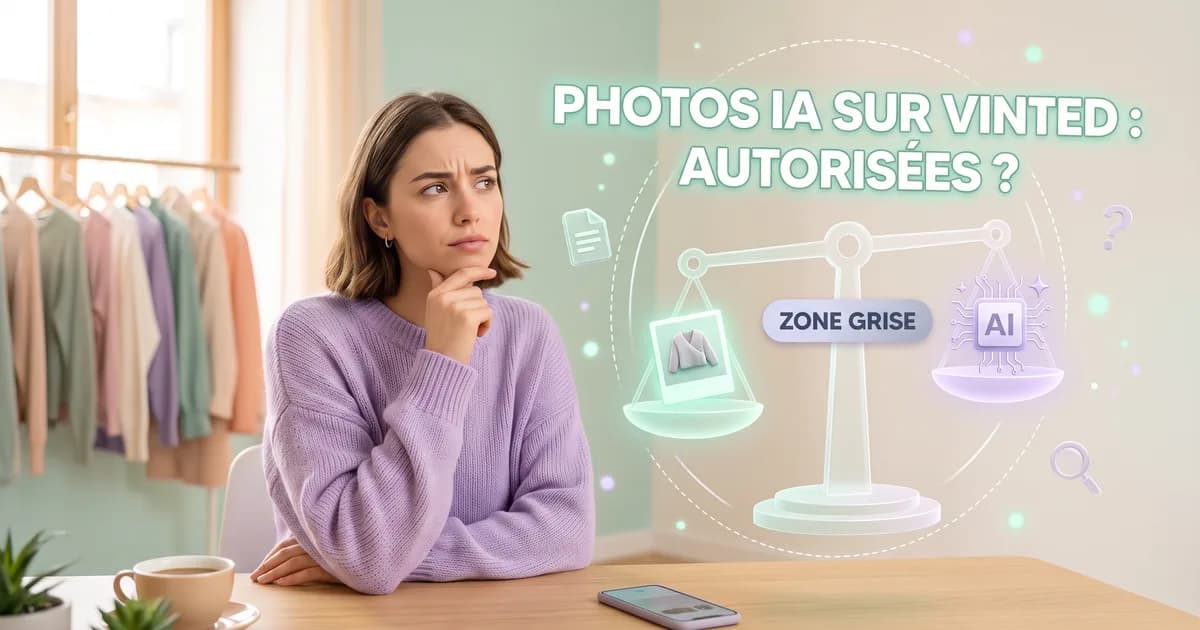
Vinted Moderation & AI Photos:
Is it against Vinted's rules to use AI photos? Can your listing be removed? Can you mix real and AI photos? We unpack the grey area, with official sources.
Read the article
How to take Vinted photos
White background, natural light, AI mannequin or worn shot: all 2026 techniques for Vinted photos that sell fast. Before/after examples included.
Read the article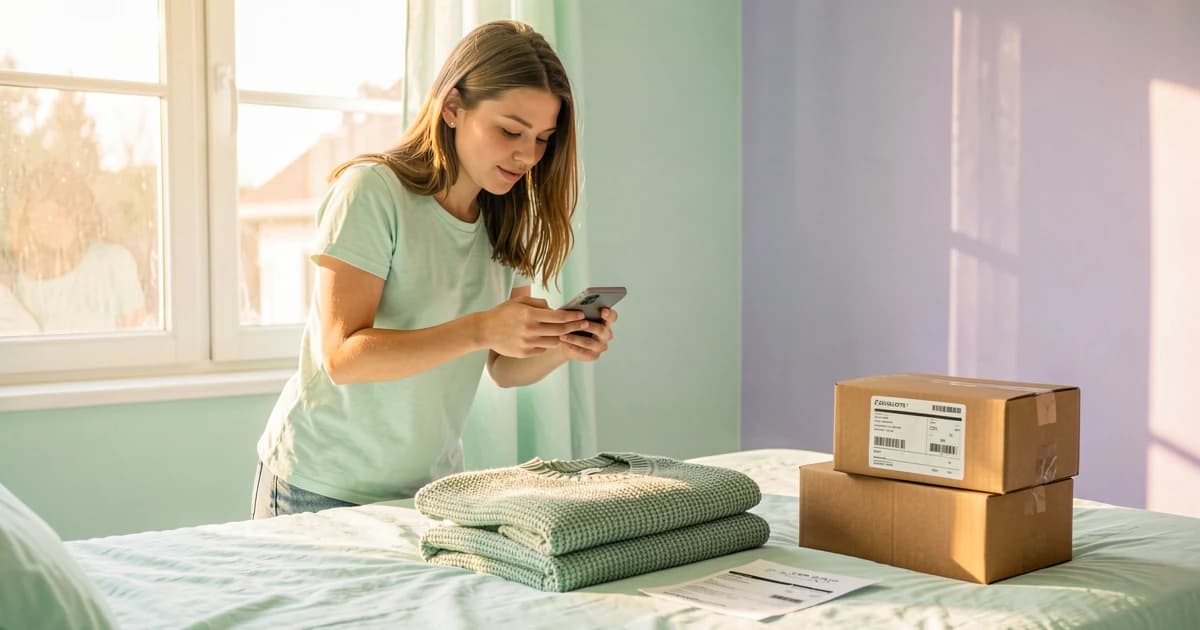
Vinted USA:
Vinted opened in the US in January 2026 with no seller fees. How listing, shipping and payouts work, and what changes if you come from Poshmark.
Read the article
Vinted UK Tax 2026:
DAC7, the £1,000 trading allowance, CGT — the plain-English breakdown of every UK tax threshold that matters for Vinted sellers in 2026.
Read the articleFrançois
Founder of Vendy Studio
Founder of Vendy Studio, which he builds from northern France. He designs the tool, tests the AI models and digs through the rules — tax and platform — that frame online reselling.
⚖️ Legal Information & Transparency
Independence: VendyStudio is an independent service. We are not affiliated with Vinted, Beebs, Depop or any other resale platform mentioned in this article.
Responsibility: Always check your platform's terms and conditions before publishing. You are responsible for the content you publish.
Moderation: Platform moderation systems are opaque and may change. VendyStudio cannot guarantee that your photos will be accepted by moderators.
This article is informational. It reflects our reading of publicly available sources as of 9 September 2026 (Vinted press releases, catalog rules, terms and conditions in force — links at the end of the article). This is not legal advice, nor an official position from Vinted. Vendy Studio is an independent service with no connection to Vinted or any other platform mentioned. Rules can change without notice: always read the version in force before you publish — you remain responsible for your own listings.
Photos that are genuinely yours,
taken nowhere else ✨
Vendy Studio starts from the photo you took of your own item: nothing is borrowed from the internet, nothing comes from a stock library. It's on you to check the render stays faithful to your item before you publish — you keep control.