

How to Price Items on Vinted UK: The 2026 Algorithm-Proof Playbook
Pricing is the second biggest reason items don't sell on Vinted — right after photos. Get it wrong and the algorithm buries you. Get it right and your listings climb the feed automatically. Here's the UK-specific framework.
Vendeuse Vinted depuis 2019, +800 ventes. J'utilise VendyStudio pour mes photos.

In this guide
- Why pricing decides your visibility
- The UK secondhand benchmark
- How pricing affects the Vinted algorithm
- The 10-15% buffer strategy
- Impulse pricing: under £20
- When to drop the price — and when to hold
- Bundle pricing: sell more, rank higher
- Vinted Spotlight: worth it?
- Vinted vs Depop pricing advantage
- Why photos are part of your price strategy
- FAQ
Why Your Price Decides Your Visibility (Not Just Your Sales)
Most Vinted sellers think of pricing purely as a sales question: "Will someone pay this?" But on Vinted UK, pricing is also a visibility question — and the algorithm is watching.
The Vinted search ranking system compares your listing's price to similar active items in the same category. Price too high relative to the market and your listing slides down the results — quietly, without warning, without explanation. Price in line with the market and you stay competitive. Price strategically and you can actually climb.
This guide is about doing it right the first time. It covers the UK-specific benchmark, the 10-15% buffer strategy, the impulse pricing zone, when to drop (and when not to), bundle deals, and whether paid Spotlight is actually worth it.
0%
seller commission
Vinted charges sellers nothing — your advantage over Depop
30–60%
of retail
typical UK secondhand sale price
72%
buyer savings
average saving vs buying new, per Vinted data
Pricing and photos work together
The algorithm doesn't evaluate price in isolation — it weighs it against engagement signals (clicks, favourites, messages). A listing with a great photo gets more clicks, which improves its score, which gives it more tolerance for a slightly higher price. We'll come back to this at the end, but keep it in mind throughout.
What's the Real UK Secondhand Benchmark?
Before you set a single price, you need to know what things actually sell for. Not what they're listed for — what they sell for.
The 30-60% rule
According to Vinted's own published data, items on the platform typically sell at 30 to 60% of their original retail price. The average Vinted buyer saves 72% compared to buying new. That spread is wide because it depends heavily on:
- Brand: a Levi's denim jacket and an H&M denim jacket are not the same market
- Condition: "Good" vs "Like New" can shift the price by 30-40%
- Category: trainers retain more value than most tops; outerwear more than knitwear
- Trend status: an item that's currently on trend (see our Vinted summer 2026 trends guide) commands a premium
How to benchmark properly: sold prices, not listed prices
This is the single biggest mistake sellers make. You search for your item, see five listings, and anchor your price to theirs. But those listings haven't sold. The sellers may all be making the same mistake.
The right way:
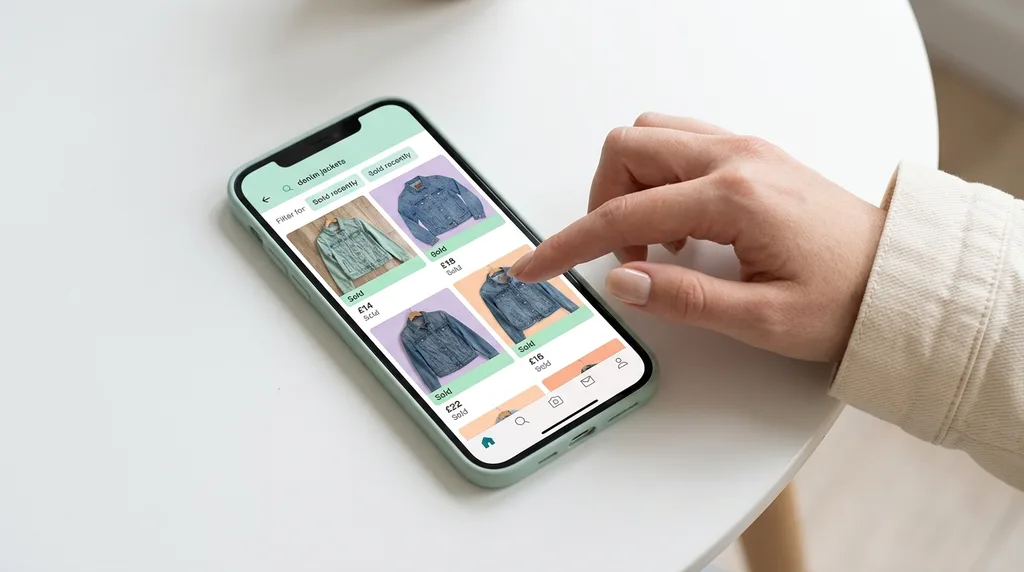
- Search the item on Vinted
- Sort by "Sold recently" (or filter completed listings)
- Note the prices at which similar items in similar condition actually changed hands
- Use that range — not the listed range — as your benchmark
This takes three minutes and it's the most important step in your pricing process.
How the Vinted Algorithm Uses Your Price
Here's something most guides don't tell you: the Vinted algorithm actively uses price as a ranking signal.
Specifically, it compares your price to similar active listings. A price significantly above comparable items is a signal that your listing is either overvalued or unlikely to convert — and the algorithm deprioritises it in search results accordingly.
This means:
- An overpriced listing doesn't just fail to sell. It gets fewer views. Which gets fewer favourites. Which drops it further. It's a compounding penalty.
- A competitively priced listing gets more visibility, which generates more engagement, which reinforces the ranking.
10–15%
buffer above minimum
list above your floor to absorb offers
–5 to –10%
optimal drop
temporary visibility boost without flagging the algorithm
£20
impulse-buy ceiling
items under £20 sell without questions or negotiation
The pricing sweet spot
The algorithm doesn't reward the cheapest listing — it rewards competitive ones. You don't need to be the lowest price. You need to be within the market range, with a listing quality (photos, description, response rate) that justifies your position within that range.
For more on how the algorithm scores your overall listing, see our Vinted algorithm 2026 guide.
Consistent price drops = red flag
Dropping your price repeatedly in quick succession sends a negative signal to the algorithm — it reads it as a "problematic listing" that nobody wants. One well-timed, meaningful drop (5-10%, after 7-10 days of low engagement) is fine. A new price every other day is not.
The 10-15% Buffer Strategy (How to Price for Negotiation)
Vinted has an offer feature. Buyers use it. And if you price at your absolute minimum, every offer forces you to either accept below what you're happy with or decline and lose the sale.
The solution is simple: list 10-15% above your target price.
If you want £15 for a jumper, list it at £17. When a buyer offers £14, you counter at £15 and you're done — everyone's happy. You got what you wanted, they got a small win. If someone just buys at the listed price, you've earned a bonus £2.
This strategy:
- Protects your minimum without requiring you to decline every offer
- Gives buyers the psychological satisfaction of a negotiated deal
- Keeps your listed price competitive relative to the market (as long as you've benchmarked correctly)
What if offers come in too low?
Don't ignore them — counter-offer. An ignored offer is a lost sale. Even a counter-offer near your listed price keeps the conversation going. A significant portion of Vinted sales in the UK complete after at least one offer-counteroffer exchange.
The negotiation pocket in practice
You want £15 → list at £17. Buyer offers £12 → counter at £15. They accept → done. Buyer offers £15 → accept immediately. Buyer buys at £17 → bonus. In no scenario do you go below your floor. This is the buffer strategy in three lines.
Impulse Pricing: The Magic of Sub-£20 Items
There is a significant behavioural shift in buyers at the £20 mark.
Items priced under £20 function as impulse buys. Buyers don't deliberate, they don't ask questions about fabric composition and measurements, they don't negotiate for 48 hours. They see it, they want it, they tap "Buy Now". The friction is minimal.
Items over £20 enter a different category: considered purchases. The buyer wants more photos, asks about condition, waits to see if the price drops, compares with other listings. They might still buy — but the process is longer and there are more opportunities to lose them.
This has practical implications for how you price:
- If your floor is £18-19, price at exactly that and let the sub-£20 psychology do the work. Don't buffer up to £22 and lose the impulse advantage.
- If your floor is £25, you're in considered-purchase territory no matter what — price with the 10-15% buffer as normal.
- If you're deciding what to keep vs. sell, items you'd want to price under £20 are worth listing more than items that only make sense at £30+, because the selling speed difference is dramatic.
Price is optimised. Are your photos doing their job?
Get 3 free AI retouches
Buyers compare your listing against others in the same price range. A professional photo is what tips them towards yours. Try VendyStudio free.
When to Drop the Price — and When to Hold
You've listed, benchmarked correctly, applied the buffer. Now what? When do you move?
The 7-10 day rule
Give a new listing at least 7 days before considering a price adjustment. The algorithm needs time to index your listing properly, and some categories have longer buying cycles than others.
After 7-10 days, check two things:
- Views: are you getting them?
- Favourites: are people saving the item?
| Situation | What it means | Action |
|---|---|---|
| Good views, no sales | Price slightly high, or photos aren't converting | Counter any offers; try a 5-10% drop |
| Low views, no sales | Algorithm has deprioritised you | Check photos and title first; then drop 10% |
| Good views AND favourites, no sales | Price too high for intent | Drop 10%, this is a hot item with a price barrier |
| Zero views from day 1 | Listing quality issue | Fix photos and title before touching price |
The drop ceiling
When you do drop, drop once and drop meaningfully — at least 5-10%. A £0.50 reduction on a £12 item is invisible to the algorithm and invisible to buyers scanning the feed. A 10% drop on that same item is a fresh signal and a visible change in the search results.
When to hold
If you're getting views and favourites but no purchases, the item is clearly desirable at that price for many people — they're saving it. This is actually a signal to hold or even raise slightly, then wait. The person who saved it may come back, or someone new will buy it at the listed price.
Bundle Pricing: Sell More, Rank Higher
One of the most underused tools in Vinted UK selling is the bundle discount.
Vinted lets you set an automatic percentage discount when a buyer purchases two or more items from your wardrobe. The most common and effective option is 10% off for 2+ items.
Why bundles work on both sides
From the buyer's perspective: they get a discount, reduce per-item postage cost (Vinted ships multiple items together), and experience the satisfaction of a deal.
From the seller's perspective:
- Higher average order value per transaction
- Lower effort per pound earned (one transaction, one postage process)
- Algorithmic benefit: multi-item purchases signal high-quality seller engagement
The bundle effect on the algorithm
Vinted's algorithm tracks engagement signals across your entire wardrobe, not just individual listings. A seller who regularly completes multi-item sales has a higher overall profile score — which feeds back into the visibility of all your listings. Bundles are one of the cleanest ways to generate that signal without any gimmicks.
How to activate it: Go to your profile → Settings → Bundle discounts → Set your percentage.
Bundle strategy for slow-moving items
If you have items that have been sitting for 4+ weeks, consider pairing them mentally with fast-moving items. Don't explicitly suggest bundles in your descriptions, but price each item attractively solo so that a bundle becomes compelling. A buyer purchasing a trending piece may spot your slower items and add them for the bundle discount.

Vinted Spotlight: Is Paid Boosting Worth It?
Vinted offers a paid "Spotlight" feature: £0.99/day or £6.95/week. It promotes your listing to more buyers in search results.
The honest answer on whether it's worth it: it depends entirely on your pricing first.
Spotlight amplifies visibility. If your listing is well-priced, well-photographed and well-described, more visibility = more sales. The ROI is real.
But if your price is off-market, Spotlight just shows your overpriced item to more people who will scroll past it. You've paid for exposure, not for sales. The algorithm still uses your click-through rate and conversion rate as quality signals — a boosted listing that nobody clicks on can actually damage your long-term ranking.
The rule: Fix price, photos and title first. Only use Spotlight when you're confident the listing is converting well — or for a high-value item where the maths work (a £200 jacket where £6.95/week is 3.5% of the sale price makes more sense than on a £15 top where it's 46%).
- Set price once, never revisit
- Price 30% above comparable sold listings
- Drop price every 48 hours out of frustration
- Ignore negotiation offers, no counter-offer
- Run Spotlight on an overpriced listing
- Benchmark sold prices (not just listed prices)
- List 10-15% above your floor to absorb offers
- Drop once, by 5-10%, after 7-10 days of no sales
- Counter-offer close to your target, don't ignore
- Fix the price before running any paid boost
The Vinted vs Depop Pricing Advantage
If you're cross-listing on both platforms (or deciding where to focus), here's a competitive pricing fact that changes everything: Vinted charges sellers zero commission.
Depop charges 2.9% + £0.30 per sale. On a £20 item, that's £0.88 in fees. On a £50 item, it's £1.75.
This means:
- You can undercut a Depop listing by the fee amount and still earn the same net on Vinted
- Or price identically on both platforms and pocket more per sale on Vinted
- On lower-value items (the sub-£20 impulse zone), the margin difference is proportionally larger
- 2.9% + £0.30 fee per sale
- Must price higher to cover commission
- Buyers often aware of the seller fee
- Narrower margin on lower-value items
- 0% seller commission
- Can price lower than Depop and earn the same
- Or price identically and keep more per sale
- Better margin on items under £20
This isn't an argument to abandon Depop — its audience skews younger and more brand-conscious, which suits certain items. But for everyday high-street and mid-range labels, Vinted's zero-commission model is a structural pricing advantage that smart sellers use deliberately.
Why Your Photos Are Part of Your Pricing Strategy
This might seem like an odd section in a pricing guide, but bear with us — it's one of the most practically important points.
The Vinted algorithm doesn't rank listings by price alone. It ranks them by a combination of price relevance, engagement (clicks, favourites, messages) and listing quality (photo clarity, description completeness).
Photo quality directly affects what price you can hold.
A listing with sharp, well-lit photos on a neutral background generates more clicks per impression. More clicks means a better engagement score. A better engagement score gives you more tolerance for a slightly higher price in the algorithm's eyes. Two identical items, same price, different photo quality — the better-looking one will consistently get more views.
Conversely: if your photos are dark, cluttered or unflattering, no amount of price optimisation fully compensates. You may need to price 15-20% below the market just to generate any engagement at all — effectively paying a "bad photo tax" on every sale.

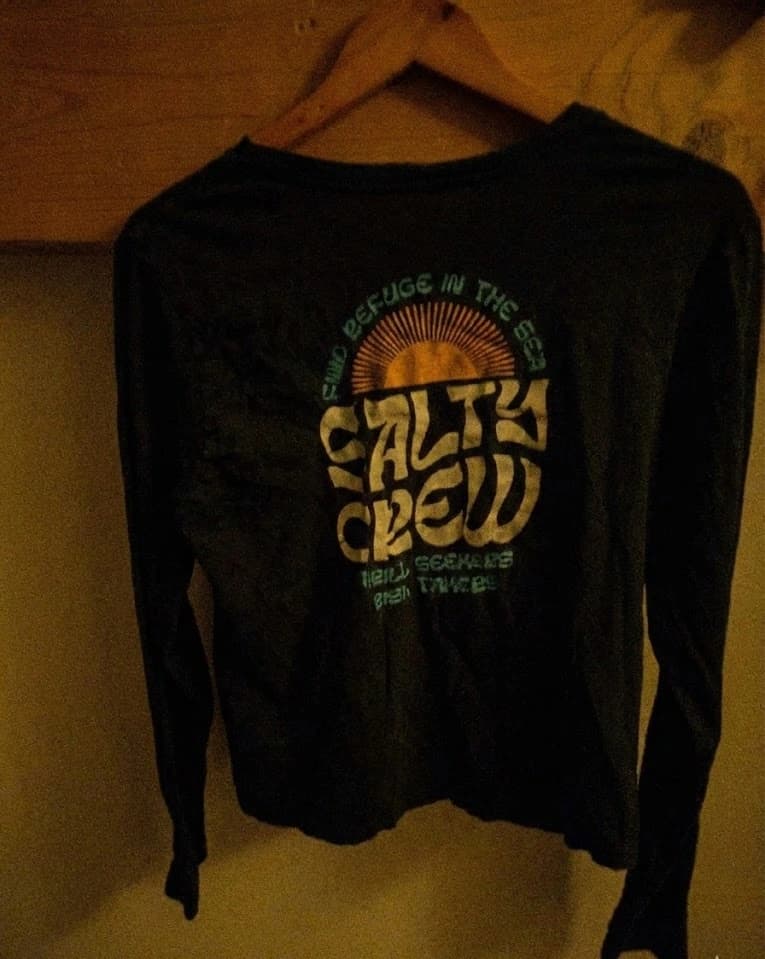
The practical upshot: invest 3 minutes in a good photo before you obsess over £1 increments in pricing. See our complete Vinted photo guide for the full method — it covers lighting, background, flat-lay vs worn and AI retouching.
Pricing Checklist Before You Publish
Your Pricing Playbook, in Brief
Getting your Vinted UK pricing right isn't complicated — it just requires discipline in a few key areas:
- Benchmark sold prices, not listed prices. Three minutes on Vinted's "Sold" filter before you set anything.
- Apply the 10-15% buffer above your minimum. Protect your floor, absorb offers, occasionally earn the bonus.
- Respect the impulse zone. Items under £20 behave differently — let them.
- Drop once, meaningfully (5-10%), after 7-10 days of low engagement. Never drop repeatedly in quick succession.
- Enable bundle discounts. 10% for 2+ items is the sweet spot — it increases order value and sends positive signals to the algorithm.
- Use Spotlight only when the fundamentals are solid. It amplifies what's already working; it doesn't fix what isn't.
- Fix your photos before your price. Bad photos impose a "bad photo tax" on everything else.
The difference between a wardrobe that earns £30/month and one that earns £300/month is rarely the items themselves — it's the combination of good photos, smart pricing and consistent activity. Start with the first two.
FAQ: Pricing on Vinted UK
Further Reading

Why I'm No Longer Selling on Vinted?
Shadowban? Unexplained drop in views? Discover the REAL Vinted algorithm criteria and top sellers' hacks to boost your visibility.
Lire l'article
Vinted Photo Tips:
Lighting, background, flat-lay vs worn shot, AI retouching: the complete method for Vinted photos that actually sell. 8 mistakes to avoid + checklist.
Lire l'article
Vinted Shadowban 2026:
Your Vinted account shadowbanned? Discover the 5 real causes, how to detect a shadowban in 3 minutes and the step-by-step unblocking plan.
Lire l'article
What to Sell on Vinted in May 2026
Flared jeans +2075%, polka-dot blouses +2000%, bubble skirts +42%. The pieces exploding this summer 2026 on Vinted with Google Trends data.
Lire l'article
Selling on Vinted: 5 critical mistakes
The 5 critical mistakes to avoid on Vinted and how AI boosts your photos.
Lire l'article
What to Source & Sell on Vinted UK:
Charity shops, car boots, Primark hauls: the UK sourcing guide for Vinted summer 2026. Real margins (buy £2–5, sell £8–15), brands to hunt and quiet luxury tips.
Lire l'article
Vinted UK Tax 2026:
DAC7, the £1,000 trading allowance, CGT — the plain-English breakdown of every UK tax threshold that matters for Vinted sellers in 2026.
Lire l'article⚖️ Legal Information & Transparency
Independence: VendyStudio is an independent service. We are not affiliated with Vinted, Beebs, Depop or any other resale platform mentioned in this article.
Results: Performance figures mentioned are based on user feedback and internal research (January 2026). Results may vary.
Responsibility: Always check your platform's terms and conditions before publishing. You are responsible for the content you publish.
Moderation: Platform moderation systems are opaque and may change. VendyStudio cannot guarantee that your photos will be accepted by moderators.
The right price gets you halfway there.
Great photos close the deal.
Buyers click on listings with pro photos — then they check the price. VendyStudio transforms your shots in seconds: neutral background, clean lighting, styled presentation. 3 free credits on sign-up.